README

cii go-report clomonitor artifacthub slack go-doc rtd apache bsd gpl fossa gateway-api codespaces
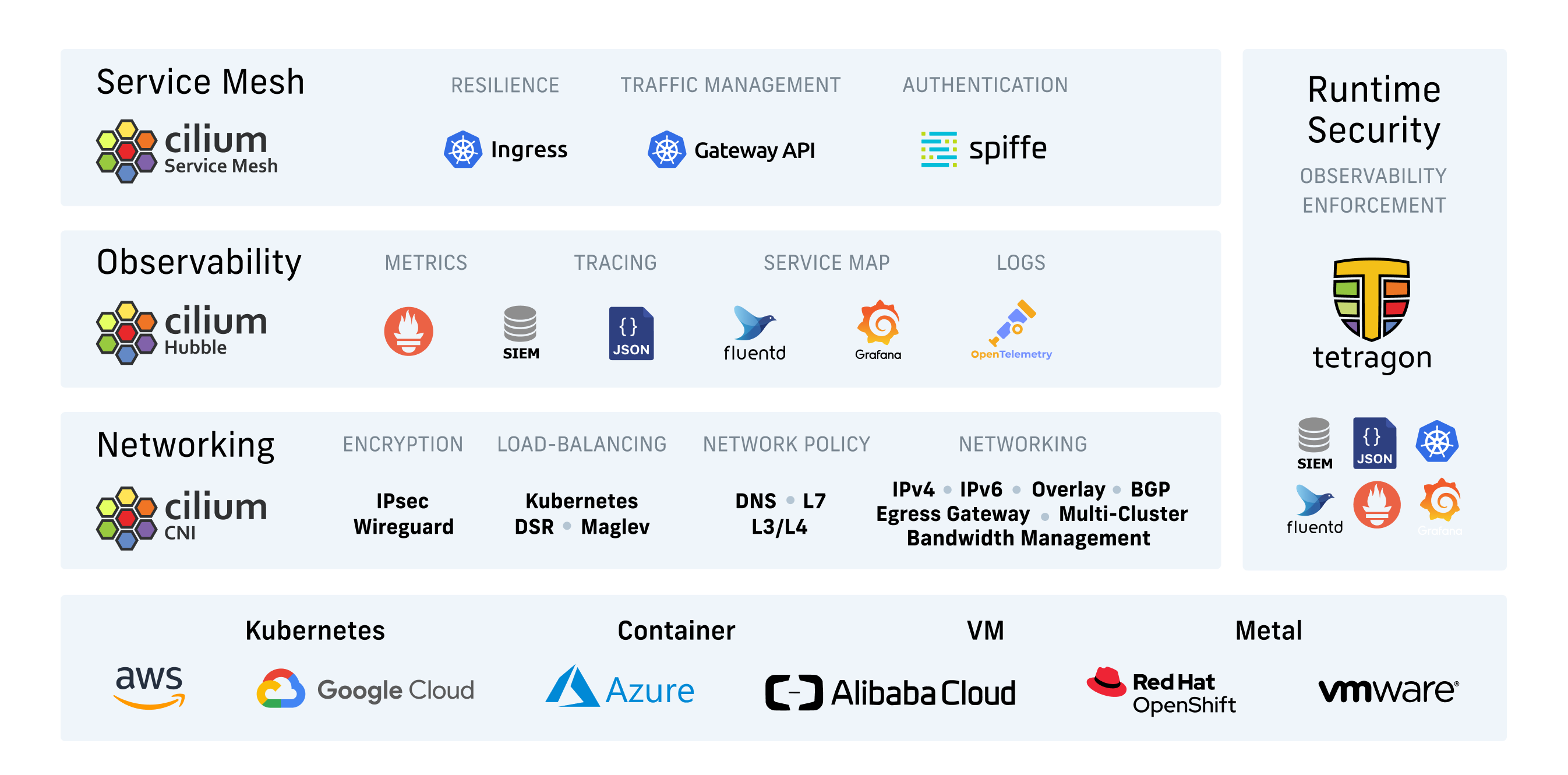
Cilium is a networking, observability, and security solution with an eBPF-based dataplane. It provides a simple flat Layer 3 network with the ability to span multiple clusters in either a native routing or overlay mode. It is L7-protocol aware and can enforce network policies on L3-L7 using an identity-based security model that is decoupled from network addressing.
Cilium implements distributed load balancing for traffic between pods and to external services, and is able to fully replace kube-proxy, using efficient hash tables in eBPF, allowing for almost unlimited scale. It also supports advanced functionality like integrated ingress and egress gateway, bandwidth management and service mesh, and provides deep network and security visibility and monitoring.
A new Linux kernel technology called eBPF_ is at the foundation of Cilium. It
supports dynamic insertion of eBPF bytecode into the Linux kernel at various
integration points such as: network IO, application sockets, and tracepoints to
implement security, networking and visibility logic. eBPF is highly efficient
and flexible. To learn more about eBPF, visit eBPF.io_.