README

Figranium — Deterministic Control for an Agentic World
Figranium is a self‑hosted, block-first automation control plane built for teams that want predictable, auditable browser workflows without pushing sensitive data to third‑party SaaS. It bundles a React/Vite frontend, an Express/Playwright backend, helper scripts, and optional CLI tooling so you can sketch blocks, inject JavaScript, rotate proxies, and run everything locally.
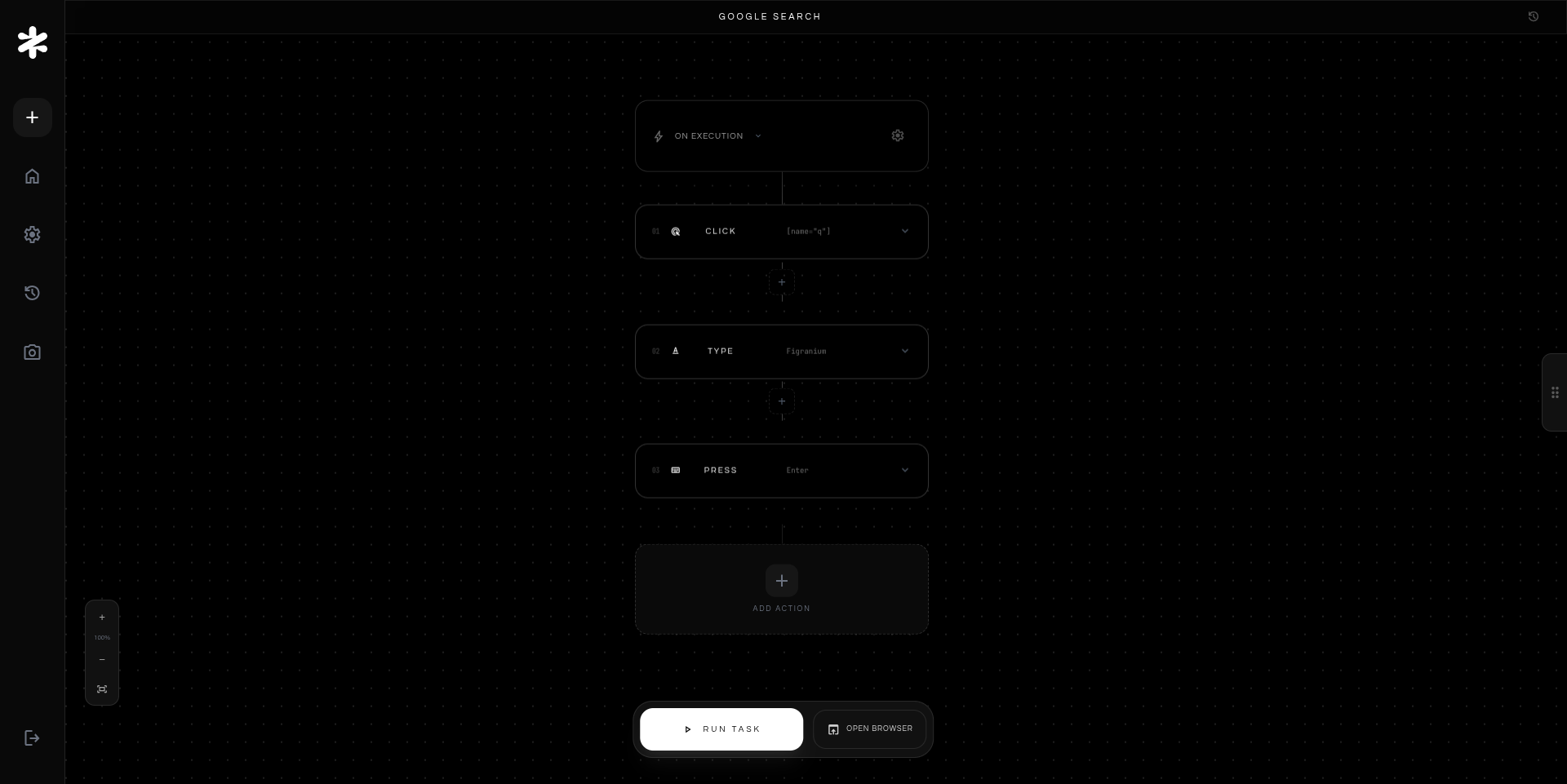
What You Get
- Block‑based automation — build flows with actions like click, type, wait, hover, and execute JavaScript against modern pages.
- Task API + CLI — trigger saved tasks via HTTP (
/tasks/:id/api) ornpx figraniumwhile passing variables and securing runs with the API key you control. - Captures & storage — automatically store screenshots/recordings and cookies; view them in the captures tab, reset storage, or download built assets.
- Proxy management — host, rotate, or import HTTP/SOCKS proxies, flag a default, and toggle rotation per task.
- Task Scheduling — run workflows automatically using visual interval/daily/weekly/monthly settings or advanced cron expressions.
- Security-first — session authentication, IP allowlists, secret management, and audit trails live entirely inside your environment.
Architecture Snapshot
-
Frontend
- Vite with React (TypeScript) drives
/dashboard,/tasks,/settings,/executions, and/captures. - The Settings screen is tabbed (
System,Data,Proxies) and houses panels for API keys, user agents, layout, storage, and version info. - Components call
/api/*endpoints through the Vite dev proxy (seevite.config.mts), sharingAPP_VERSIONviasrc/utils/appInfo.ts.
- Vite with React (TypeScript) drives
-
Backend
server.js(Express) handles auth (/api/auth), task metadata, hooks into Playwright, and exposes/api/settings/*for runtime configuration.- Requirements: Node 18+ (LTS), Playwright bundled via
npm install. - Storage is plain‑file:
data/for proxies and allowlists,public/capturesfor visuals, and browser session cookies stored internally.